
Rooftop unit repair
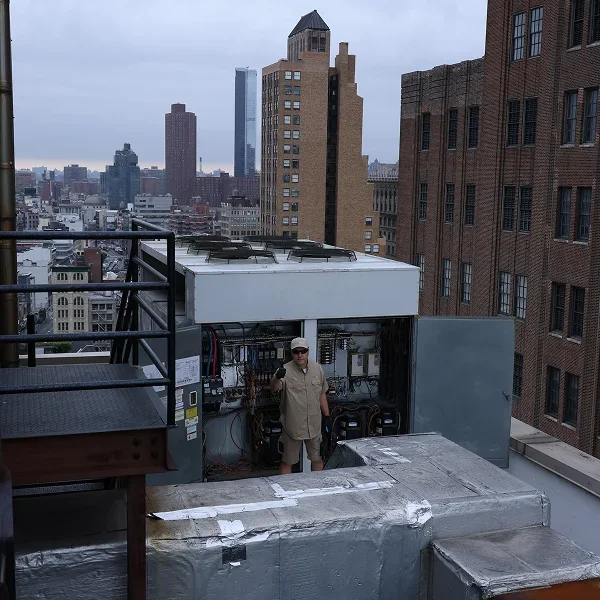
Managing Your Rooftop Unit (RTU): A Practical Guide
Rooftop units (RTUs) are the workhorses of commercial HVAC. Unlike the walk-in cooler, these systems are exposed to the harshest elements, from extreme heat to heavy rain. Because they involve high-voltage electricity, pressurized refrigerant, and gas heating components, safety must be your absolute priority.
⚠️ Critical Safety Warning
Do not attempt to open the electrical cabinets, access internal refrigerant lines, or service the burner assembly unless you are a licensed professional. Aside from the obvious danger of high-voltage electricity ($460\text{V}$ or $230\text{V}$ typical), you risk voiding your warranty and violating environmental regulations regarding refrigerant handling.
What You Can Check (Safe & Simple)
Before calling for service, perform these basic checks to save time and potential "trip fees":
- Filter Inspection: Clogged filters are the number one cause of RTU failure. They restrict airflow, which can cause the evaporator coils to freeze or the internal safety limit switches to trip.
- The Disconnect Switch: Check the electrical disconnect box located near the unit. Sometimes a surge or a loose wire will trip the breaker, or someone may have accidentally turned it off during roof maintenance.
- Intake/Exhaust Clearances: Ensure the intake and exhaust vents are not covered by debris, tarps, or bird nests. An RTU needs to "breathe" to exchange heat efficiently.
- Thermostat/BMS: Verify that the thermostat or Building Management System (BMS) is sending the correct signal. If the display is blank, check the $24\text{V}$ control transformer fuse.
When to Call the Pros
If the simple checks above don't solve the issue, it is time to bring in the pros. Specifically, call a technician if you notice:
- Ice on the Coils: This indicates a refrigerant leak or a severe airflow restriction.
- Rapid Clicking/Chattering: This often signals a failing contactor or a shorted relay on the control board.
- Burning Smells: Shut down the unit via the disconnect immediately. This usually points to a failing motor or an electrical short.
- High-Pressure/Low-Pressure Lockouts: Modern RTUs have diagnostic lights that will blink codes if they hit a safety limit. If you see a flashing error code, write it down and report it to your HVAC contractor.
The Golden Rule of RTUs
Preventative maintenance is cheaper than reactive repair. Scheduling a professional "spring startup" and "fall shutdown" to clean the condenser coils and check the gas pressure will prevent 90% of the emergency failures that occur during the peak of summer or winter.
Would you like me to draft a Preventative Maintenance Schedule that you can hand to your building maintenance team?